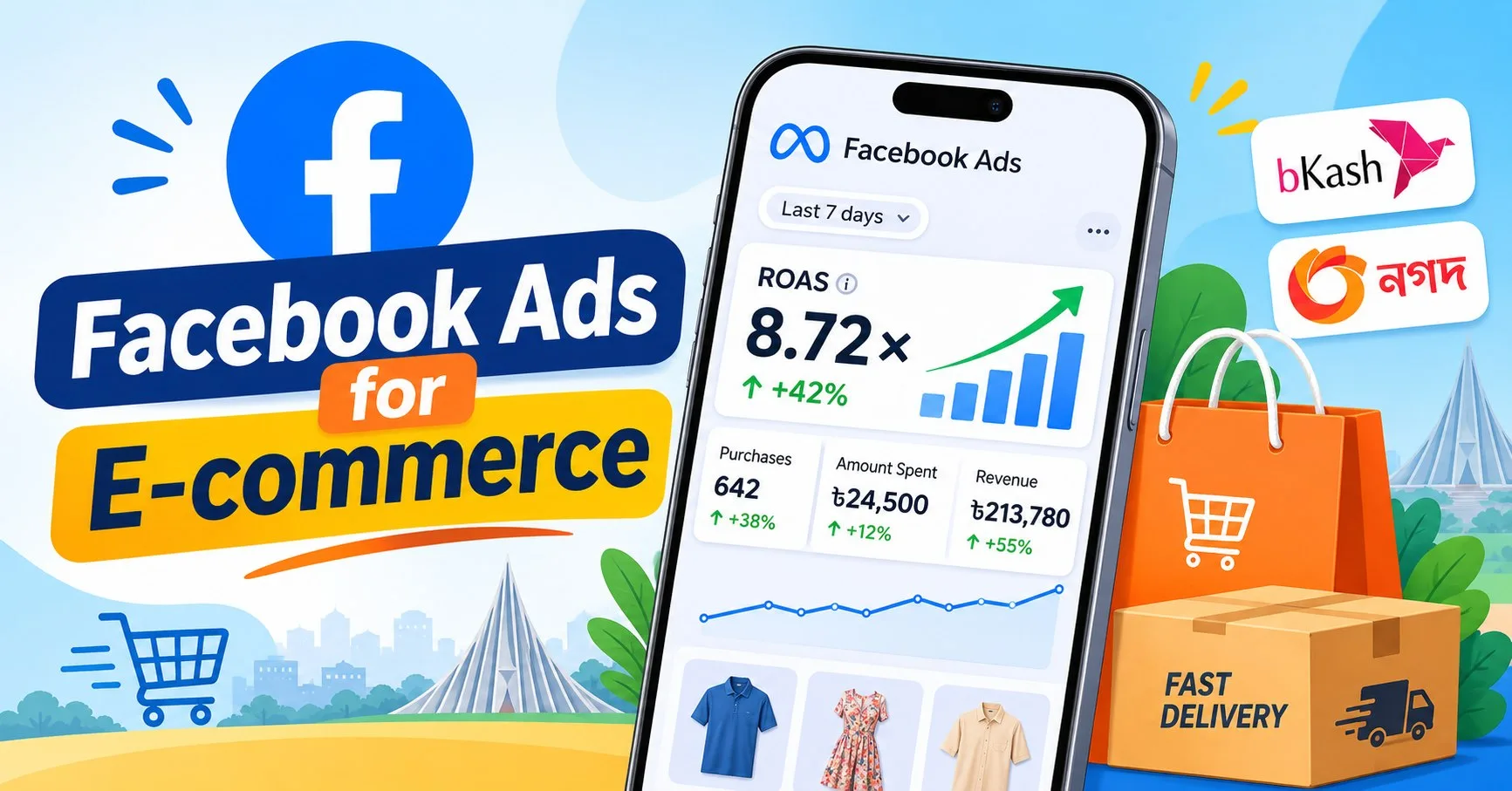
Are you running an e-commerce or f-commerce business in Bangladesh, struggling to make your facebook ads for ecommerce profitable? You’re not alone. Many online shops waste money on boosted posts that don't convert. The key to consistently growing sales is a strategic campaign structure that guides customers from first look to final purchase.
This approach, known as a sales funnel, allows you to talk to different customers in different ways—from cold audiences who have never heard of you to warm audiences who are ready to buy. This guide breaks down the exact 3-stage structure to build a reliable sales machine for your online store. For a complete overview of the platform, you can start with the Facebook Ads Bangladesh beginner's guide.
Key Takeaways
Build a 3-Stage Funnel: Structure your campaigns into Top of Funnel (TOFU), Middle of Funnel (MOFU), and Bottom of Funnel (BOFU) to systematically convert strangers into customers.
Adapt to Your Business Model: Use Sales objectives with website tracking for e-commerce, and Engagement/Leads objectives with Messenger for f-commerce.
Always Be Testing: Continuously test ad creatives (images, videos, copy) and audiences to find what resonates and lower your costs. Dynamic Creative is a powerful tool for this.
Retargeting is Where Sales Happen: Most conversions come from retargeting. Create specific campaigns for users who have visited your site, added to cart, or messaged your page.
Track for Profit, Not Vanity: Focus on Return On Ad Spend (ROAS) and Cost Per Acquisition (CPA) to ensure your ad spend is generating real profit for your business.
On This Page
What is a Facebook Ads Funnel for E-commerce?
A Facebook Ads funnel for e-commerce is a strategic model that maps out the customer's journey from first seeing your brand to making a purchase. Think of it like a real-world shop. You wouldn't ask someone who just walked in the door to buy immediately. You'd let them browse (Awareness), maybe ask if they need help (Consideration), and then guide them to the checkout when they're ready (Conversion). The funnel replicates this process online.
Instead of showing the same aggressive "Buy Now!" ad to everyone, you create different campaigns for three distinct stages: Top of Funnel (TOFU) for awareness, Middle of Funnel (MOFU) for consideration, and Bottom of Funnel (BOFU) for conversion. This ensures you deliver the right message to the right person at the right time, dramatically increasing your conversion rates and lowering your ad costs.
The 3-Stage Campaign Structure That Sells
The most effective way to structure your Facebook ads for an online shop is to create separate campaigns for each stage of the customer journey. This gives you granular control over your budget, messaging, objectives, and targeting. A well-structured funnel doesn't just find customers; it creates them.
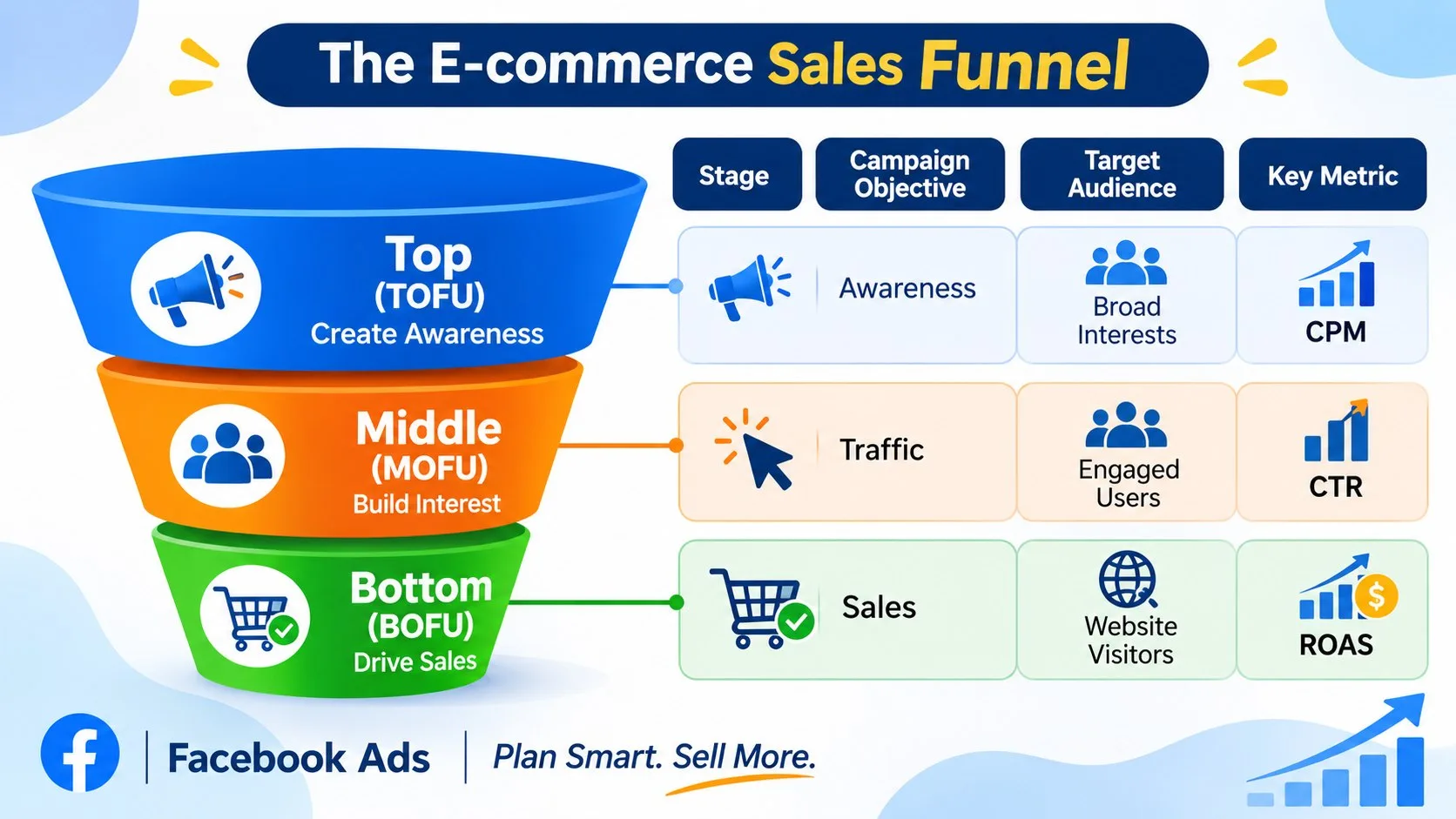
Stage 1: Top of Funnel (TOFU) – Building Awareness
The primary goal at this stage is to introduce your brand to a cold audience—people who don’t know you exist but are likely to be interested in your products. You are not trying to make a hard sale. Your focus is on grabbing attention, providing value, and building a pool of people you can retarget later.
Campaign Objective: Awareness, Reach, or Video Views. The goal is to get your ad in front of as many relevant people as possible for the lowest cost (CPM).
Target Audience: Broad audiences and Lookalike audiences. Broad audiences are defined by interests, demographics, and behaviors relevant to your product (e.g., "Online shopping," "Women's clothing," "Dhaka," aged 25-40). Lookalike Audiences are created by Meta based on your existing customer lists or page engagers, finding new people who share similar characteristics.
Ad Creatives: Content should be engaging and non-salesy. Think short, eye-catching videos (e.g., a tutorial, behind-the-scenes look, or user-generated style content), beautiful carousel images showcasing a collection, or helpful guides. The key is to stop the scroll and make a memorable first impression.
Key Metrics (KPIs): Cost Per 1,000 Impressions (CPM), Reach, Video View Percentage (e.g., ThruPlay), Ad Recall Lift.
Stage 2: Middle of Funnel (MOFU) – Driving Consideration
Now you target a warm audience—people who have already interacted with your brand through your TOFU ads, visited your Facebook page, or watched your videos. They know who you are. The goal here is to build trust, showcase your product's value, and encourage them to take the next step.
Campaign Objective: Traffic, Engagement, or Leads. For e-commerce, a Traffic campaign can send users to specific category pages. For f-commerce, Engagement (with "Messaging apps" placement) or Leads (optimized for Messenger conversations) is perfect for starting sales chats.
Target Audience: Custom Audiences. This is your retargeting pool from the TOFU stage. Examples include people who have watched 50% or more of your video ads, engaged with your Facebook/Instagram Page, or saved one of your posts.
Ad Creatives: Now you can be more product-focused. Use carousels to display different products with prices, share customer testimonials or reviews, run polls in your ad copy, or use Instant Experiences to create a mini-landing page within Facebook.
Key Metrics (KPIs): Click-Through Rate (CTR), Cost Per Click (CPC), Cost Per Landing Page View, Cost Per Messenger Conversation.
Stage 3: Bottom of Funnel (BOFU) – Closing the Sale
This is where you convert interest into revenue. You are now targeting a hot audience—people who have shown clear purchase intent. Your messaging should be direct, often with a clear call to action (CTA) and an incentive to buy now. This is where the majority of your ROAS (Return On Ad Spend) will be generated.
Campaign Objective: Sales (for e-commerce) or a continued Engagement/Leads campaign (for f-commerce). The Sales objective tells Meta's algorithm to find people within your audience who are most likely to complete a purchase.
Target Audience (Retargeting): Highly specific Custom Audiences. This includes website visitors from the last 30 days, people who have viewed specific products, users who added items to their cart but didn’t purchase ("cart abandoners"), or people who have previously messaged your page. Remember to exclude recent purchasers to avoid wasting money and annoying them.
Ad Creatives: Be direct and compelling. Dynamic Product Ads (DPA) are incredibly powerful here, automatically showing users items they previously viewed on your site. Also effective are ads with special offers, discount codes ("Use code 'SAVE10' for 10% off!"), or reminders about abandoned carts that create a sense of urgency.
Key Metrics (KPIs): ROAS (Return On Ad Spend), Cost Per Acquisition (CPA), Purchase Conversion Value, Add to Carts.
E-commerce vs. F-commerce: Adapting Your Strategy in Bangladesh
While the TOFU-MOFU-BOFU funnel is universal, the technical setup and objectives change significantly based on whether you have a website (e-commerce) or sell directly through your Facebook page inbox (f-commerce).
For E-commerce (with a Website)
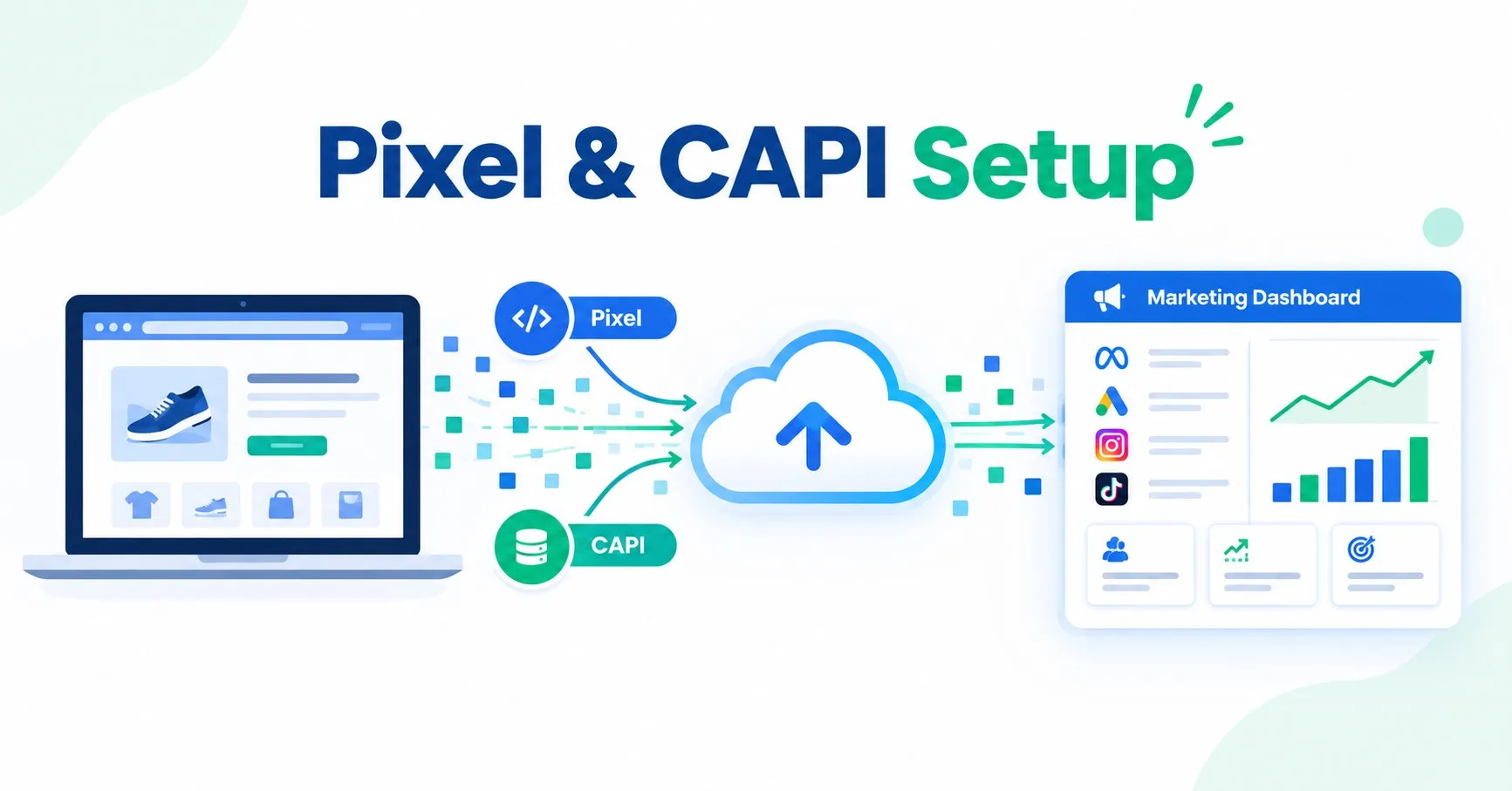
If you have a WooCommerce or Shopify store, your greatest asset is data. To succeed, you absolutely must have the Meta Pixel and Conversions API (CAPI) installed correctly. This allows you to track every user action, from viewing a product to completing a purchase. For a detailed walkthrough, see this complete guide to Facebook Pixel & CAPI setup. Your BOFU campaigns should always use the "Sales" objective, optimizing for the "Purchase" event.
Harnessing Advantage+ Shopping Campaigns (ASC)
For established e-commerce stores with good pixel data, Advantage+ Shopping Campaigns are a game-changer. ASC uses Meta's AI to automate much of the campaign creation process, combining prospecting and retargeting into a single, highly efficient campaign. You provide the creatives and a budget, and the algorithm finds the buyers. However, ASC is not for beginners; it needs a healthy volume of purchase data to learn effectively. Start with manual campaigns to build data, then introduce ASC to scale your winners.
For F-commerce (Selling via Page/Inbox)
For the thousands of Bangladeshi businesses selling on Facebook, the "checkout" happens in Messenger. Your goal is to start valuable conversations. At the MOFU and BOFU stages, your primary objective will be "Engagement" with the conversion location set to "On your ad > Messaging apps," or a "Leads" campaign optimized for Messenger conversations. Your retargeting audience isn't "Add to Cart" but rather "People who sent a message to your Page." Your sales process is manual and success depends on your ability to respond quickly and helpfully in Messenger to confirm the order and arrange payment via bKash or Nagad.
Creative Testing: The Engine of Ad Improvement
Never assume you know which ad will perform best. A structured testing process is the only way to consistently improve your ecommerce ads strategy and lower your costs. The goal is to identify the winning combination of images, videos, headlines, and copy that resonates most with your audience.
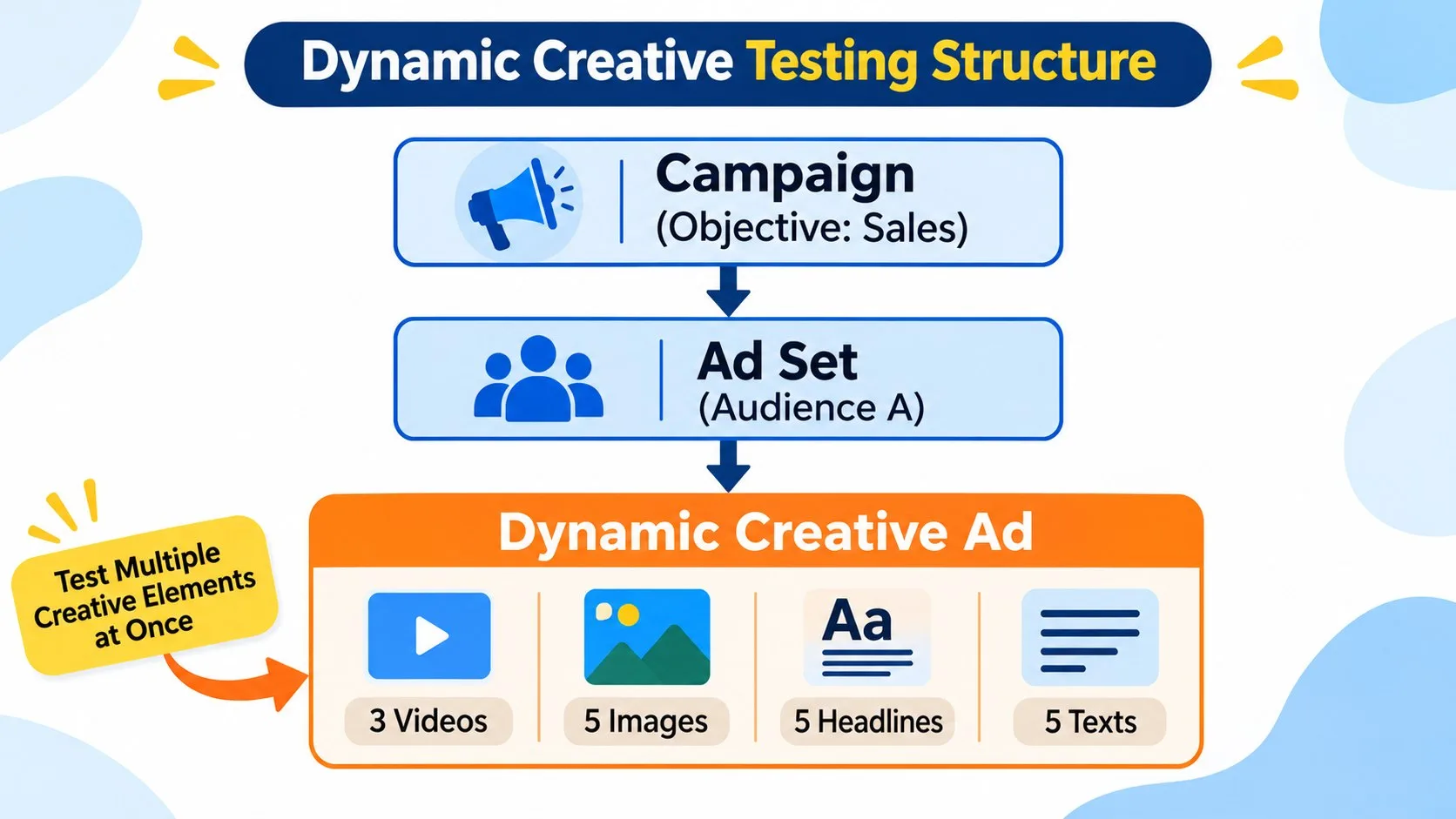
Here’s a simple yet powerful framework using Dynamic Creative:
Create One Campaign: Set your overall objective (e.g., Sales).
Create One Ad Set: Define your audience (e.g., a broad interest-based audience for testing at TOFU).
Enable Dynamic Creative: At the ad level, toggle the "Dynamic Creative" option on. This allows you to upload multiple assets separately.
Upload Your Assets: Provide up to 10 images/videos, 5 headlines, 5 primary texts, and 5 descriptions.
Launch and Analyze: Meta will automatically mix and match these assets to find the highest-performing combinations for your audience. After 4-5 days, you can view the breakdown to see which individual images, headlines, or copy generated the best results (e.g., lowest CPA or highest ROAS). Use these winning elements to create your next control ad.
Key Metrics That Actually Measure Profitability
Likes and comments are nice for social proof, but they don't pay your bills. For an e-commerce or f-commerce business, you must focus on the metrics that connect directly to your revenue and profit.
CPA (Cost Per Acquisition / Cost Per Purchase): This is your total ad spend divided by the number of sales. If you spent 2,000 BDT and got 10 sales, your CPA is 200 BDT. You must know your product's profit margin to understand if this CPA is profitable. If your profit per sale is 500 BDT, a 200 BDT CPA is great. If your profit is only 150 BDT, you're losing money on every sale.
ROAS (Return On Ad Spend): This is the single most important metric for ROAS Facebook ads. It measures the total revenue generated for every taka spent on advertising. It's calculated as:
(Revenue from Ads / Ad Spend). For example, if you spent 2,000 BDT and generated 8,000 BDT in sales, your ROAS is 4x. A ROAS above 3x is a common starting goal, but the "good" number depends entirely on your margins.Customer Lifetime Value (CLV): This is a more advanced metric. It considers the total profit a customer generates over their entire relationship with your business. A slightly unprofitable CPA on the first sale might be acceptable if that customer is likely to make multiple repeat purchases in the future.
Common Mistakes to Avoid with E-commerce Ads
Many Bangladeshi businesses make the same costly errors. Avoiding them will immediately put you ahead of 90% of your competition.
Only Using the "Boost Post" Button: Boosting is simple but it's not a strategy. It lacks the precise targeting, optimization, and tracking capabilities of a proper campaign set up in Meta Ads Manager. To build a sales funnel, you must use Ads Manager.
Incorrect Pixel/CAPI Setup: Without accurate data tracking on your website, you are flying blind. You cannot optimize for purchases, calculate ROAS correctly, or create effective retargeting audiences for cart abandoners.
Choosing the Wrong Campaign Objective: This is critical. If you want sales, choose the "Sales" objective. If you choose "Traffic," Meta's AI will find you people who are good at clicking links, not people who are good at buying things. Align your objective with your business goal.
Ignoring Retargeting: Studies show that only a tiny fraction of customers buy on their first visit. Failing to run retargeting ads for website visitors and cart abandoners is like letting customers walk out of your store without asking if they need help. It's leaving the easiest sales on the table.
Not Setting Up Audience Exclusions: You must exclude recent purchasers from your prospecting and retargeting campaigns. Showing "Buy Now!" ads to someone who just bought from you yesterday is a waste of money and a bad customer experience.
Not Designing for Mobile: Over 98% of Facebook users access the platform via a mobile device. Ensure your images and videos are vertical (9:16 or 4:5 aspect ratio) and that any text is large and clear enough to be read on a small screen without zooming.
Frequently Asked Questions
What is a good ROAS for Facebook ads in Bangladesh?
A good starting benchmark for e-commerce in Bangladesh is a ROAS of 3x to 4x. This means for every 100 BDT you spend, you get 300-400 BDT in sales revenue. However, profitability depends on your product margins. A lower ROAS can still be good for businesses with high customer lifetime value or low product costs.
How much should I spend on Facebook ads for my online shop?
If you're new, start with a daily budget you are comfortable experimenting with, like 500-1,000 BDT per day for testing. Focus this budget on one funnel. As you find winning ads and see a positive ROAS, you can gradually increase the budget. Avoid scaling too quickly; let the data guide your spending decisions. For a detailed breakdown of what ads cost in Bangladesh, see Facebook Ads Cost in Bangladesh.
What campaign objective is best for f-commerce sales?
For f-commerce businesses selling via Messenger, the "Engagement" objective (with "Messaging apps" as the conversion location) or the "Leads" objective (optimized for "Messenger conversations") are most effective. These are designed to start conversations with potential buyers, which is your main point of sale. Test both to see which yields higher quality inquiries for less cost.
Should I use Advantage+ Shopping Campaigns?
Yes, if you have an e-commerce website with a correctly installed Meta Pixel that has gathered at least 50 purchase events. Advantage+ Shopping Campaigns (ASC) are powerful for scaling sales by automating targeting. However, they need sufficient data to work well, so they are not ideal for brand new stores.
How long should I run a Facebook ad test?
Let your ad tests run for at least 4 to 5 days before making a decision. This gives the Meta algorithm enough time to exit the "learning phase" and stabilize performance. Making decisions based on first-day results is a common mistake, as performance can fluctuate significantly in the initial 72 hours.
What is the difference between f-commerce and e-commerce ads?
The main difference is the conversion destination. E-commerce ads drive sales on a website, optimizing for "Purchase" events tracked by the Meta Pixel. F-commerce ads generate sales inquiries in Messenger or WhatsApp, optimizing for "Engagement" or "Leads" to start conversations directly on the platform.
Why are my retargeting ads not working?
Common reasons include a retargeting audience that is too small (e.g., low website traffic), ad fatigue from showing the same creative too often, or not offering a compelling reason to return. Ensure your website has enough visitors to build a viable audience, refresh your ad creatives regularly, and test a small, exclusive discount to entice users back.
Can I run Facebook ads for my online shop without a website?
Yes, absolutely. This is the core of "f-commerce" in Bangladesh. You can run successful ad campaigns using objectives that drive messages to your Facebook Page inbox or WhatsApp. Your page acts as your storefront, and your checkout process is the conversation you have with the customer to confirm their order and payment.
Your E-commerce Ads Checklist for Success
Use this checklist to ensure your campaigns are set up for success from day one.
☑ Meta Pixel and Conversions API are correctly installed and tracking key events (e.g., ViewContent, AddToCart, Purchase).
☑ Campaign structure is divided into TOFU, MOFU, and BOFU funnels.
☑ Each funnel stage uses the correct campaign objective aligned with its goal.
☑ Custom audiences are created for retargeting (website visitors, video viewers, page engagers, cart abandoners).
☑ Audience exclusions are in place (e.g., excluding purchasers from non-purchaser campaigns).
☑ You are actively testing creatives, preferably using Dynamic Creative.
☑ All creatives are optimized for mobile viewing (vertical format, clear text).
☑ You are tracking and making decisions based on ROAS and CPA, not vanity metrics.
☑ For f-commerce, you have a system for responding quickly to messages and managing orders.
Next Steps
Building a profitable ad strategy is a marathon, not a sprint. It requires patience, testing, and a commitment to data-driven decisions. Here’s how to get started:
Audit Your Current Setup: Use the checklist above to identify and fix any foundational issues in your current ad account.
Build Your First Funnel: Start with a small, manageable budget. Create one campaign for each stage (TOFU, MOFU, BOFU) and let it run.
Launch, Learn, and Iterate: Monitor your results closely for at least a week. Don't make drastic changes too quickly. Let the data tell you what’s working and what isn't, then optimize.
If you want to implement a professional, data-driven ad strategy but lack the time or expertise to manage it yourself, a dedicated Facebook and Instagram ads management service can build and scale this entire system for you.
Related Reading:
Sources
Checked on 2026-10-31.